Commercial Property PR
Stability Drives Demand For Quality Commercial Property
For seasoned participants in the commercial property market, the MPC’s recent decision to keep the repo rate steady at 6.75% signals reduced policy uncertainty and the return of a more predictable cost-of-capital environment.
“The commercial property market doesn’t move on optimism,” says Andrew Dewey, managing director of Swindon Property. “Performance is driven by fundamentals, namely, the spread between funding costs and sustainable yields, the durability of cash flows, and increasingly tough competition in a tenant market that has become far more demanding.”
While the broader market may have shrugged at the MPC’s decision, experienced investors have welcomed the clarity it brings as interest rate stability is restoring the ability to price risk accurately, differentiate assets, and transact with greater confidence.

Pricing discipline restored
“While commercial banks’ prime lending rate remains at 10.25%, debt is still expensive in absolute terms,” says Dewey, “however, the psychological shift is significant. Investors are no longer underwriting deals in an environment where the cost of capital keeps rising unexpectedly, negatively influencing potential investors.
“This shift is creating renewed flexibility as investors are able to renegotiate extensions, rebalance covenants and restructure portfolios, while transactions that struggled to make sense in 2024 and 2025 may now proceed, provided sellers can demonstrate a credible operational or leasing strategy.”
As a result, yield movements will become increasingly asset-specific rather than indiscriminate. “Stability should not be confused with safety,” Dewey cautions. “It gives the market permission to price risk properly again. Assets that can’t compete will lag, but this is precisely where informed advice becomes critical.”
Why details matter in pricing
Dewey says that a broad-based recovery across commercial property remains unlikely in 2026. Instead, performance will be determined at a micro-market level, shaped by node quality, tenant demand, operating reliability and leasing friction.
“At Swindon, our teams are trained to analyse these metrics in depth,” says Dewey. “While bricks and mortar matter, sustained tenant demand – correctly reflected in cap rates – should drive valuation decisions.
“Well-located assets that offer resilience in utilities, security and access, and that align with tenant needs, are expected to attract capital. These properties may appear expensive until competitive bidding highlights the cost of liquidity in a turning market.
“Secondary stock, particularly buildings requiring significant capital expenditure to remain relevant, will either struggle to trade or do so at punitive yields,” says Dewey. “If a building’s operating reality has changed, its valuation assumptions must change too. Applying yesterday’s metrics to today’s assets leads to unwelcome surprises in outcomes.”
Demand trends – follow the tenant signals
The defining demand trend of 2026 is occupier concentration into fewer, higher-quality spaces.
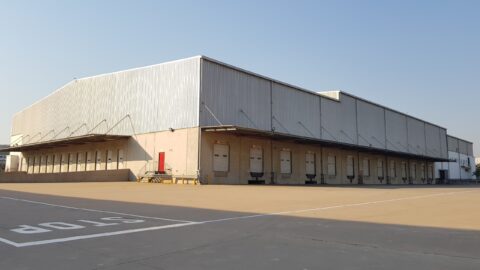
Industrial and logistics property continues to offer the clearest demand signal, underpinned by productivity, efficiency and operational continuity. “Logistics tenants are not just buying space,” Dewey explains. “They are buying throughput, reliability and reduced downtime. Properties that remove friction from business operations and are priced accordingly can expect sustained demand and low vacancy.
“Retail property performance is similarly nuanced. Assets aligned with modern living and shopping patterns will perform. Grocery-anchored centres remain resilient and attractive because they intersect daily necessity with value-driven retail. Destination retail can also thrive if actively managed, but only where tenant mix, leasing discipline, parking flow, safety and marketing are treated as core operational priorities.
“Office demand has polarised, and buildings that justify the commute, offering accessible locations, strong amenities, reliable utilities and a compelling user experience, are performing, while older stock in compromised nodes continues to face challenges. Although SAPOA’s Q2 2025 survey shows national office vacancy improving to 13.3%, the lowest level since the pandemic, recovery remains uneven – a trend that looks set to continue into 2026.”
Importance of strategic geographic locations
Increasingly, successful investors are thinking in terms of nodes rather than towns or provinces. “They are targeting specific catchments defined by access, security, tenant ecosystems and operational resilience,” says Dewey. “Private capital needs to think more like institutional capital, because the gap between strong and weak nodes is the difference between stable income and persistent vacancy
Dewey advises investors to focus on four core principles in the year ahead:
- Underwrite operating reliability as rigorously as rent. Reliability of cost-to-operate is occupancy insurance.
- Prioritise durable income over headline yield. High yields look attractive but often disguise future vacancy and capex risk.
- Avoid speculation. Be clear on your strategy – re-tenanting, refurbishment to improve leasing velocity, or redevelopment that enhances relevance and appeal.
- Maintain liquidity. Secondary stock will create opportunities for buyers with capital ready to deploy.
“This year, fundamentals will matter more than ever,” concludes Dewey. “Buildings that can compete, nodes with genuine depth, and income streams that can withstand operating realities will define success. For the first time since interest rates reached historic lows in July 2020, we believe the market is operating on stable, transparent fundamentals, and we are well positioned to guide clients through this environment.”

Swindon Property Research division: The table above shows the interest rate cycle, highlighting the 10-year period between cycles, 2006 to 2016, and again settling in 2026 at 10.25%.
For further information contact Swindon Property on info@swindon.co.za or (021) 422 0778 / (031) 324 3540 / (011) 268 6315.