AI PR
4Sight Calls For A More Focused, Accountable Approach To AI Adoption
According to 4Sight, a JSE‑listed multinational technology group, the missing ingredient is not technology capability, but leadership focus – specifically, knowing where intelligence should be applied to deliver the greatest business impact.
4Sight is advocating a more disciplined approach to AI adoption, one grounded in the long‑established Pareto Principle, often referred to as the 80/20 rule. The principle suggests that a small proportion of activities typically drives the majority of outcomes – a concept that the group believes is increasingly critical in the age of AI.
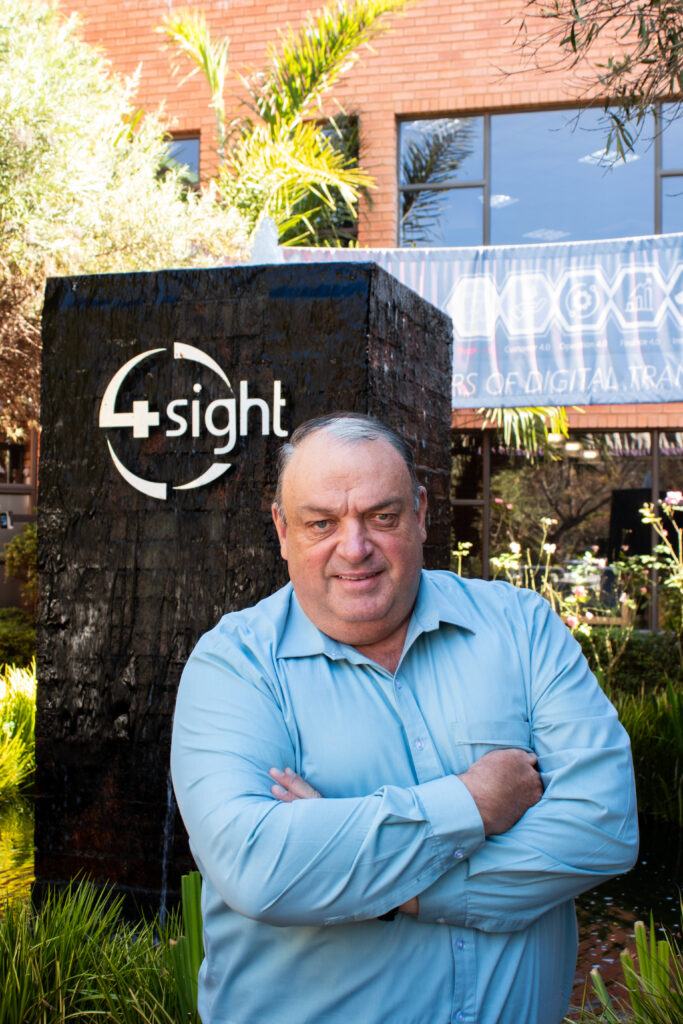
“Many organisations are deploying AI broadly, across every function and process, but are disappointed by incremental gains,” says Tertius Zitzke, Group CEO of 4Sight Holdings. “The challenge is not a lack of AI tools. It is a lack of focus on the few decisions and processes that actually drive performance.”
Rather than pursuing “AI everywhere,” 4Sight encourages organisations to identify the vital 20% within each core business function and prioritise intelligence there first. This approach shifts AI from experimentation to execution, ensuring that automation and intelligence are tightly aligned to strategic outcomes.
Across People, Growth, Operations, Finance and Innovation, the pattern is consistent. In human capital management, the greatest value is not created by automating administration, but by improving talent decisions – from recruitment quality and retention of top performers to leadership development. In sales and marketing, AI delivers the highest returns when it concentrates on revenue‑generating customers, high‑probability opportunities and the messages that genuinely convert, rather than simply increasing activity volume.
Operational environments tell a similar story. Most inefficiencies stem from a limited number of bottlenecks, failure points or exceptions. By applying AI to predict disruptions, optimise assets and orchestrate processes autonomously, organisations move beyond cost reduction towards resilience and scalability. In finance, intelligence enables a shift from retrospective reporting to forward‑looking insight, supporting predictive forecasting, early risk detection and scenario‑based decision‑making.
At the centre of this approach is 4Sight’s structured AI maturity framework, which guides organisations through progressive stages of adoption – from basic task automation to predictive, autonomous and ultimately innovative intelligence. Each stage builds capability deliberately, ensuring that AI investments mature in line with governance, accountability and business readiness.
“AI is no longer an IT project,” Zitzke adds. “It is a leadership discipline. Boards and executive teams are increasingly accountable for how AI translates into productivity, resilience and long‑term value. That requires clarity on what matters most, not just enthusiasm for the technology.”
Importantly, 4Sight emphasises that responsible AI adoption is not about replacing people, but about amplifying human expertise. By removing low‑value effort and embedding intelligence into decision‑making, organisations enable their people to focus on higher‑order work – innovation, judgement and strategic execution.
This philosophy has shaped 4Sight’s own transformation, where the group applies AI internally as a “Customer Zero,” testing, governing and refining solutions before deploying them at scale for customers. The result is a pragmatic, outcome‑driven approach to AI that balances ambition with accountability.
As AI continues to reshape industries, 4Sight believes the organisations that will outperform are not those with the most advanced tools, but those with the clearest focus: knowing where value is created, which decisions truly matter, and how intelligence should be applied to serve people, performance and sustainable growth.